


Writing fiction has been my passion for decades, and truly took hold when I was home raising my children. It was a time when women’s magazines, Redbook, McCall’s, were printing short stories written by women. I could do this!
So I set up a desk, bought a decent electric typewriter, and before my children awoke each morning, I worked to create stories. Of course the strength of my stories increased when I rooted them in the emotions and conflicts of my own life. I published some in little magazines, later moving on to novel writing.
THE SHORT STORY
Short stories arose from a reader’s desire to experience the rise and fall of the story arc in one sitting. Nathaniel Hawthorne published his collection of Twice Told Tales in 1837, probably the first known book of short stories—though not all of them were short!
Prior to this, in 1836, Charles Dickens found great success with serializing in magazines his novel The Pickwick Papers. During that time, critics wrote that there was no insinuation the work would lose quality when presented in so commercial a fashion—that criticism came later. Dickens’ work was extremely popular and affected the rise of shorter fiction.
WHY WE LIKE SHORT
It can be satisfying to experience a character’s struggle right through to the denouement in a short period of time. Our life styles—working women, a list of to-dos drumming in one’s head—adds more credence to the experience of completing a story in one sitting—or rather, propped up on pillows in bed! Short stories fill a need, the writer working with the same elements that make up a novel—but with tweaking.
CHARACTERS, POINT OF VEIW: the story will usually have one main character who is the POV character. When surveying my stores, I found the average number of characters was three—interactions occurring between two of the three. The longest story, Angel Hair, based on Robert Browning’s The Pied Piper, is a missing child story with eight characters. But a writer could create a short story simply using one character.
LENGTH: Writer’s Relief says that the short story can be as long as 30,000 words. Ginny Wiehardt, on About Careers, says no longer than 10,000 or about ten to twenty-five pages. Wikipedia opines that for genre short fiction the highest word count is 7,500. But these change with time.
And what about flash fiction, other newly created forms. Bottom line: if you are thinking of entering a contest with a short piece of fiction, most publications will be very specific about word count—so that’s the guide you might want to follow.
TIME: Novels often span years, even decades, but the short story is more limited. Some of my stories take place on the same day—though to enrich the content, there are references to the past. My story When Did My Mother Die? takes place over a year’s time—but the trajectory of the story moves in a straight line. Jumping back and forth in time can cause confusion, and because of word limitations, a tighter focus is better. That said, writing is organic, so as you proceed, you might find the need to cut out a character or move away from a scene, because your story is meandering, you’re losing your focus.
PLOT: Essential even in short fiction, focus must be endemic to the story. Get in and get out. But regardless of length, writing the short story is not simple. Some of my stories were lifted from a novel in progress. Someday It Will Be December required lots of editing and rethinking to create the emotional arc the story demands. For any work of fiction, you want a strong beginning to pull the reader in. Here is the first line from that story: In the depths of July, Claire Emmerling began to think about sex. Constantly.
From Angel Hair: The coffee gathering at Liz Grimm’s house was the first time anyone had been out in the small New England town of Hamilton since Pia Piper was fired from the local preschool, accused of fondling a boy-child in her classroom.
In an earlier story, which will always be a favorite, I used a quieter beginning to build to the heartfelt emotions of the story: Her landlord said maybe she’d imagined it. She doesn’t think so. They argued about the age of the townhouse, the condition of the roof. She was late for her shift, had to hang up. “You’re the one with squirrels in your attic,” he had yelled at her.
ENDINGS: They tantalize, inspire, make the reader weep. Endings are part of the reason I fell in love with the short story form. In high school, I read J.D. Salinger, John Cheever. After college, it was Ann Beattie, Alice Munro, Bobbie Ann Mason and Raymond Carver—they all published in The New Yorker Magazine.
In a novel, lots of things happen—often because of a complicated plot structure with twists and turns the reader does not expect.
In the short story, something has to happen, or at the very least, you have to feel that something has happened, though often it’s a small movement, a brief change, a symbolic gesture. The brevity of the text reflects a smallness that in actual living is truly gigantic, monumental.
Here is Beattie in Running Dreams, leading you into a world with few words—but at the end—wow! The soccer-punch. The narrator reflects on losing her father to cancer when she was only five.
This is the last paragraph—the father is bending over in pain, to help put on her gloves.
I remember standing with him in a room that seemed immense to me at the time, in sunlight as intense as the explosion from a flashbulb. If someone had taken that photograph, it would have been a picture of a little girl and her father about to go on a walk. I held my hands out to him, and he pushed the fingers of the gloves tightly down each of my fingers, patiently, pretending to have all the time in the world, saying, “This is the way we get ready for winter.
So lovely, the main character finding closure in this simple remembrance of her father’s love.
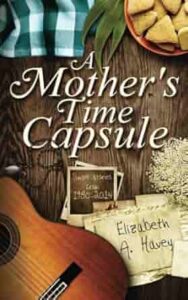
In A Mother’s Time Capsule, I also use a symbolic action to pull the story to its closure. In Someday It Will Be December, Claire is uncertain about being a single mother. The ending: But she raised her head and walked on. She would reorient herself. She would find her way.
In Fragile, Tess is a fearful mother. The ending: Tess stops. She listens, the words (of her children) falling on her with their weight of wonder. And welcoming all of it, she holds them, keeps them like a charm her two have hung gently around her neck.
In Song for Her Mother, Ana hungers for her mother Jolene’s love, yet denies her. The ending: She thought of the bread someone had set out on Jolene’s table—food for those who mourn, release from hunger. And in Making Change, Emily must accept her empty nest. The ending: At last I took off my damp brown suit. With a smile and a heave ho I flung it onto the Goodwill pile. I didn’t even hesitate.
Endings must do so many things—complete the story arc, answer questions, bring closure to conflicts and tensions. But while novel endings are often muscular and dramatic, short stories often present the conclusion using a quieter voice. As mentioned above, you do feel that something has truly happened. Thanks for reading.
6 Responses
A really good discussion of the genre, Beth.
Thanks Carol, your comment means a lot, Beth
Now you’re revving my engines. I’ve thought of doing several short stories to figure out the next novel I may write. I think they lend themselves well to expanding into a bigger form. Thanks, Beth!
Laurie, writing can be so various. But as long as you have an idea and are willing to pursue it, you will keep that
writing muscle working. You did that with you book!!
Thanks, Beth. I love that it’s harder and harder to pigeonhole fiction, genre or length. I’ve had a lot of fun with flash fiction lately. Who knew?!
Pennie, so great to get your response. I have tried to publish my novel, get an agent….nothing was working. A friend said publish with KDP
and that is now working out for me. I am excited about what you are doing. Flash fiction!! Awesome. We have talent and we just need to keep going and find our way. THANKS again, Beth